
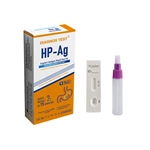
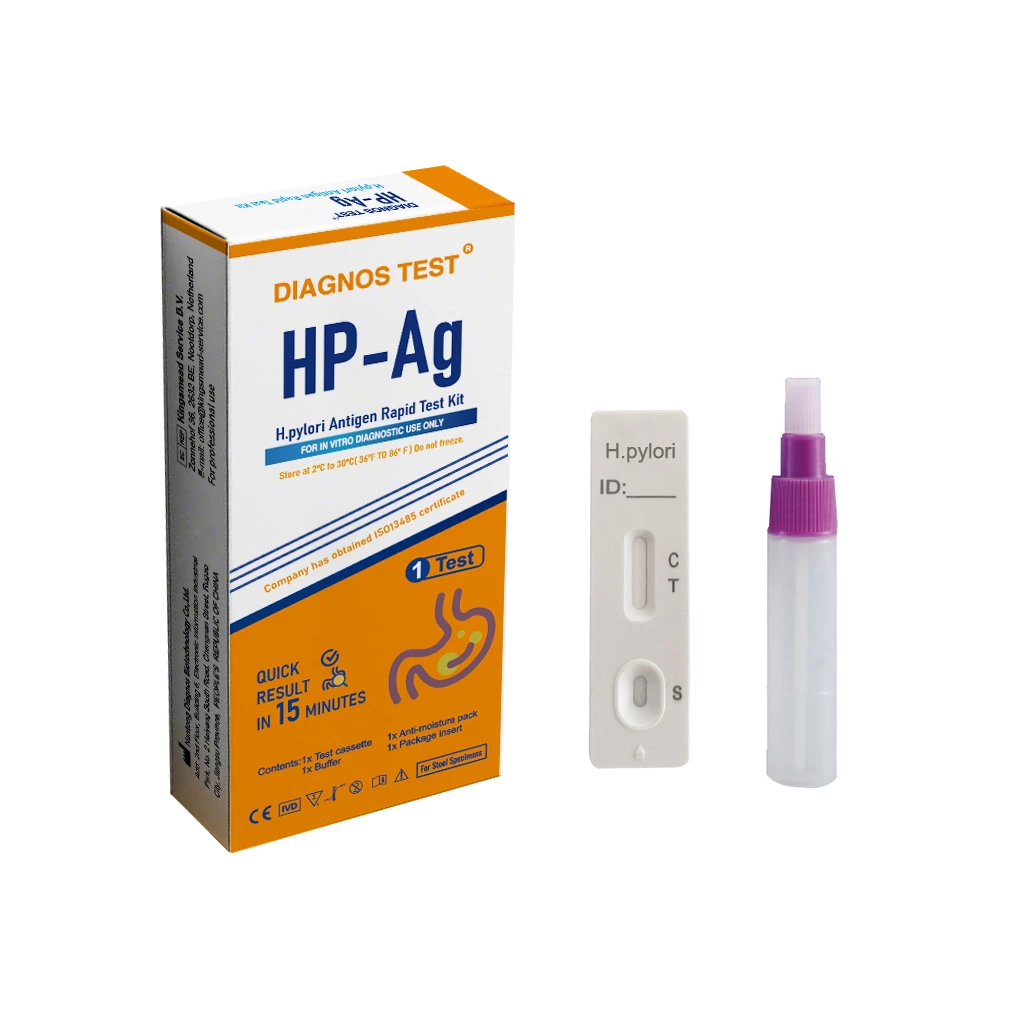
Helicobacter pylori (also known as Campylobacter pylori) is a spiral-shaped gram negativebacteria which infects the gastric mucosa. H. Pylori causes several gastro-enteric diseasessuch as non-ulcerous dyspepsia, gastric and duodenal ulcer, active gastritis and can evenincrease the risk of stomach adenocarcinoma.Many H. Pylori strains have been isolated. Among them, the strain expressing CagA antigenis strongly immunogenic and is of utmost clinical importance. Literature articles report thatin infected patients producing antibodies against CagA, the risk of gastric cancer is up to fivetimes higher than reference groups infected with CagA negative bacteria. Other associatedantigens such as Cagll and CagC seems to act as starting agents of sudden inflammatoryresponses which can provoke ulceration (peptic ulcer), allergic episodes, and decrease oftherapy efficacy. At present several invasive and non-invasive approaches are available todetect this infection state. Invasive methodologies require endoscopy of the gastric mucosawith histologic, cultural and urease investigation, which are expensive and require some timefor diagnosis. Alternatively, non-invasive methods are available such as breath tests, whichare extremely complicated and not highly selective, and classical ELISA and immunoblot
assays.
Related Product


Get in Touch
Contact Us
2nd Floor, Building 6, Electronic Information Industrial Park, No. 2 Haiyang South Road, Chengnan Street, Rugao City, Jiangsu Province, PEOPLE'S REPUBLIC OF CHINA.